
IAH 2026
World Groundwater Congress
53rd Congress of the International Association of Hydrogeologists
14-18 September 2026
Budapest Congress Center
Budapest Congress Center


This 2-day workshop will demonstrate some of the latest functionality available in MODFLOW 6 and PEST++, with an emphasis on scripting with FloPy and pyEMU. There will be (optional) hands-on exercises, as well as the opportunity to participate in numerous discussions
Aspirational Schedule:
Day 1: MODFLOW-6 and FloPy
The course includes the following: water, coffee, light lunch
This 2-day workshop will demonstrate some of the latest functionality available in MODFLOW 6 and PEST++, with an emphasis on scripting with FloPy and pyEMU. There will be (optional) hands-on exercises, as well as the opportunity to participate in numerous discussions
Aspirational Schedule:
Day 2: PEST++ and pyEMU
The course includes the following: water, coffee, light lunch
A quite common task is to produce groundwater recharge rates as inputs for other common groundwater models, like FEFLOW or MODFLOW, which are not capable of simulating groundwater recharge themselves, like MIKE SHE can do. The most common approach is to use empirical equations or simplified conceptual approaches to provide a rough guess for the required groundwater recharge, but they tend to neglect important processes like capillary rise, heterogeneous soil distributions or effects of lateral overland flow.
Especially for this purpose, it is possible to deactivate the full 3D groundwater module in MIKE SHE and use MIKE SHE only as surface water and soil hydrology model in a limited version.
In this half-day course from 9 am to 12 am you will learn how to build up a complete MIKE SHE model for Climate, Landuse, Overland Flow and the Unsaturated Zone from scratch.
After this course you will be enabled to simulate hydrological processes affecting groundwater recharge using a fully distributed approach. Apply precipitation and evapotranspiration as constant values, station data, or transient grids. Choose lumped or discretised methods for Overland Flow and Unsaturated Zone simulations, and assess land use impacts on recharge rates. Optional snowmelt and irrigation features account for seasonal and agricultural effects.
Additional benefits and recommendations:
The course includes the following: water, coffee

FEFLOW is widely recognised as a comprehensive software package for simulating subsurface flow and transport processes. Its unique meshing capabilities—supporting both structured and unstructured meshes— provide a high degree of flexibility, allowing users to represent geological settings ranging from simple to highly complex geometrical configurations in detail. FEFLOW is used globally by leading research institutes, universities, consulting firms, and government organisations.
This course provides a comprehensive overview of the software workflows involved in developing groundwater flow and contaminant transport models using FEFLOW. Through a balanced combination of theoretical background and hands-on practical exercises, participants will acquire the knowledge and skills required to begin modelling independently with the software.
Participants with prior experience using earlier versions of FEFLOW will also receive a structured introduction to the latest workflows and enhanced functionalities. In addition, the course offers opportunities for professional exchange and discussion with an experienced DHI trainer and recognised modelling expert.
Course Topics:
This course is designed for professionals working in groundwater hydrology, hydrogeology, and geology, including those employed by government agencies, state authorities, water management organisations, engineering firms, universities, research centers and consulting companies. It is suitable for both beginners in numerical groundwater modelling and experienced users seeking to refresh or deepen their existing knowledge.
Participants are expected to have a basic understanding of hydrogeology and groundwater flow processes. Prior experience with numerical modelling is advantageous but not required. The course is structured to ensure that both participants with no prior experience using FEFLOW and users of earlier software versions will benefit from the material presented.
Explore the full range of FEFLOW’s advanced simulation capabilities on our website.
The course includes the following: water, coffee
COMSOL Multiphysics is a finite element–based simulation environment widely used in the oil and gas industry for modeling coupled physical processes such as fluid flow, heat transfer, geomechanics, and chemical transport. Its multiphysics architecture allows engineers to integrate subsurface reservoir behavior with thermal and mechanical effects, which is essential for analyzing complex systems like enhanced oil recovery (EOR), wellbore stability, and reservoir compaction.
In groundwater applications, COMSOL is particularly valuable for simulating flow and contaminant transport in porous media. It enables high-resolution modeling of hydraulic gradients, reactive transport, and density-driven flow, which are critical for understanding aquifer behavior, pollutant migration, and remediation strategies. The platform’s flexibility allows users to define custom constitutive relationships and boundary conditions, making it suitable for site-specific hydrogeological studies.
For geothermal systems, COMSOL supports detailed modeling of heat extraction processes, including conduction, convection, and fluid circulation in fractured or porous reservoirs. It is commonly used to simulate geothermal doublets, borehole heat exchangers, and reservoir sustainability under long-term production scenarios. The ability to couple thermal, hydraulic, and mechanical (THM) processes provides a significant advantage in assessing reservoir performance and induced seismicity risks.
COMSOL offers several distinct benefits:
The course includes the following: water, coffee

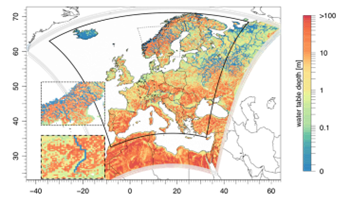
The GEWEX Groundwater Network (GGN) seeks to bring together scientists from the hydrogeologic and groundwater flow modeling communities with the land surface and Earth system modeling communities to constructively link hydrogeology and groundwater modeling to Earth system models.
At this one day workshop we will be discussing the current state of the GGN and the path forward in 2027. Particular focus will be given to working groups advancing various aspects of hydrogeology and groundwater in Earth System Models outlined in a White Paper that will be distributed before the workshop.
Tentative Agenda
The course includes the following: water, coffee